Sourcing: How Public Procurement Encourages Dialogue with Industry Experts
Contrary to some common misconceptions, the purpose of public procurement has never been to isolate public authorities from companies or industry experts.
For several years, public procurement regulations have allowed contracting authorities to gain a better understanding of the solutions available on the market before defining their needs.
This process, known as “market consultation” or “sourcing,” enables local authorities to:
- engage with market stakeholders;
- identify available technical solutions;
- understand construction and implementation constraints;
- and develop a more relevant project brief before launching a procurement procedure.
This approach is particularly important when developing a pumptrack project.


A local authority may build schools, roads or public facilities several times during its lifetime. By contrast, it will often build only one pumptrack.
In this context, expecting a municipality to define, on its own, all the technical, sporting and functional specifications of such a specialized facility would place on it a level of responsibility that cannot reasonably be assumed without expert support.
Working with specialists makes it possible to:
- identify industry best practices;
- anticipate technical challenges;
- better understand users’ expectations;
- and secure key decisions during the early stages of the project.
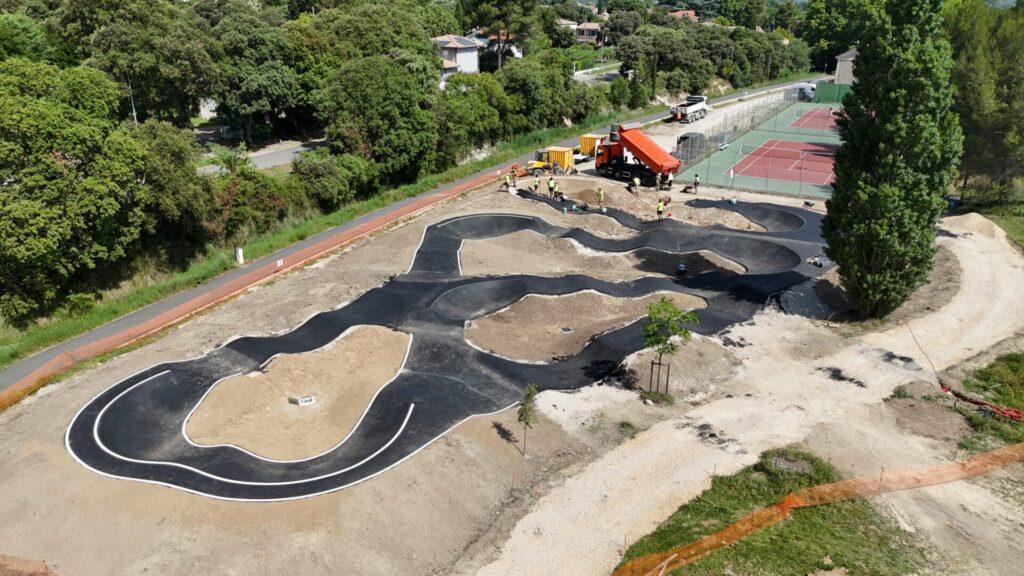
A pumptrack is probably one of the few sports facilities where understanding how people actually use the facility is just as important as mastering construction techniques.
Riding lines, speed, skill levels, transitions and the behaviour of different user groups all have a direct impact on the design of the track.
For this reason, many local authorities choose to work with multidisciplinary teams capable of combining engineering, design, construction expertise and real-world riding experience.
The objective is not to bypass public procurement rules. On the contrary, it is to ensure that public decision-makers have access to the highest possible level of information before making their choices.
Once the project’s requirements have been clearly defined, the next question concerns the procurement strategy itself. Should design and construction be awarded under separate contracts, or should a design-build approach be adopted?
This question will be explored in our next article.
Source: Article R. 2111-1 of the French Public Procurement Code.