Pumptrack and Skatepark: Differences, Uses and Complementarity
Urban sports facility projects are evolving rapidly within local communities and municipalities. Today, elected officials, urban planners and sports associations are looking for infrastructure capable of addressing multiple objectives, including sports participation, accessibility, inclusivity, local attractiveness and long-term durability.
In this context, two facilities are frequently discussed: the pumptrack and the skatepark.
Often compared and sometimes seen as competitors, these two facilities are actually highly complementary. They serve different purposes while sharing a common goal: promoting action sports and outdoor activities that are accessible to everyone.
So what are the differences between a pumptrack and a skatepark? What are their respective advantages? And why are more and more municipalities choosing to combine both?
What Is a Pumptrack?
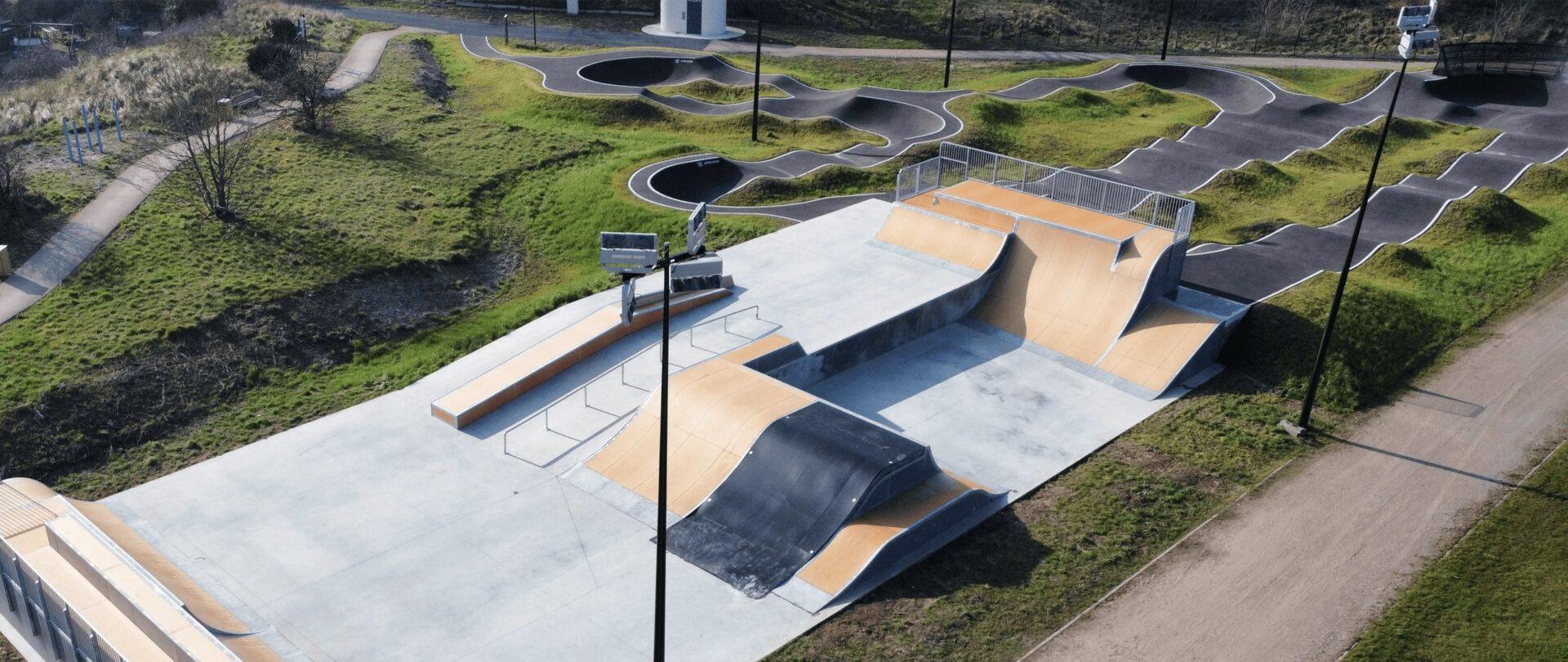
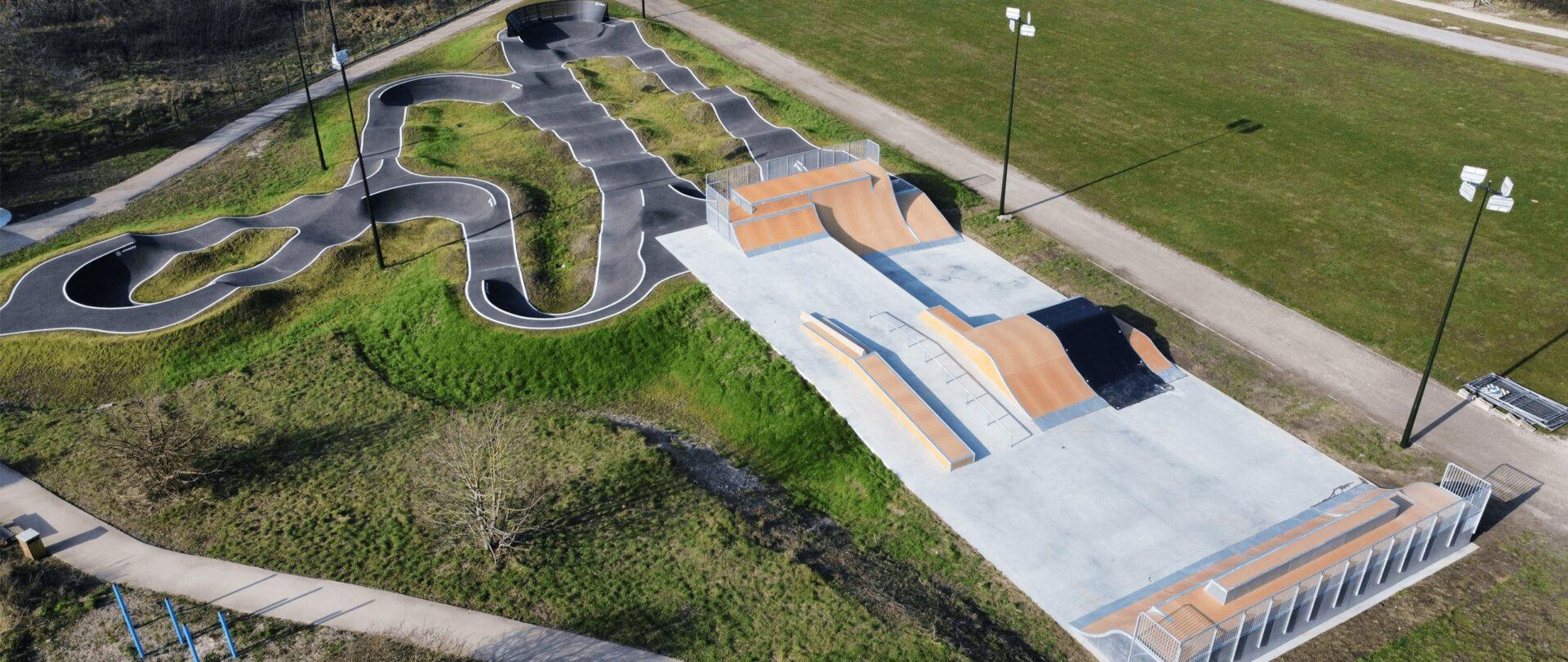
A pumptrack is a looped circuit made up of rollers, berms and asphalt riding features. Riders generate speed without pedaling by using a pumping motion with their body.
Over the past decade, pumptracks have become increasingly popular thanks to their versatility and accessibility.
A pumptrack can accommodate a wide range of users, including BMX riders, mountain bikers, balance bike riders, scooter riders, roller skaters and skateboarders. Some designs can also be adapted for wheelchair users. This versatility makes the pumptrack an exceptionally inclusive facility.
What Is a Skatepark?
A skatepark is a dedicated space designed for urban action sports. It consists of various obstacles and features that allow users to perform tricks and technical maneuvers.
Skateparks are typically built in concrete or using steel and wooden modular structures.
Common features include ramps, bowls, rails, curbs, quarter pipes, banks and funboxes.
Although historically associated with skateboarding culture, skateparks are now widely used by freestyle BMX riders, scooter riders and roller skaters.
The Main Differences Between Pumptracks and Skateparks
1. Type of Riding Experience
Pumptracks focus on flow, rhythm and continuous movement.
Skateparks are primarily designed for technical tricks, jumps and freestyle progression.
Pumptracks emphasize rhythm, balance, coordination and dynamic movement, while skateparks encourage freestyle skills, aerial tricks, creativity and technical use of obstacles.
2. Accessibility for Beginners
Pumptracks are generally more accessible to beginners.
Thanks to their intuitive design, they can be used from a very young age, particularly with balance bikes.
Skateparks often require a greater level of technical learning before certain features can be used safely.
For this reason, many municipalities choose a pumptrack as their first action sports facility for families and young children.
3. User Profiles
Pumptrack
Pumptracks attract a broad audience including children, teenagers, adults, families, recreational athletes, cyclists and school groups.
Skatepark
Skateparks mainly attract skateboarders, freestyle riders, teenagers, young adults and more experienced users.
Although skatepark participation continues to grow, the technical expectations are often higher than on a pumptrack.
4. Traffic Flow and Safety
Pumptracks operate on a continuous circulation principle. Riding lines are generally easier to read and user flow is naturally distributed throughout the track.
In a skatepark, multiple riders may share the same features simultaneously, which requires a greater understanding of etiquette, priorities and riding behavior.
This does not mean that skateparks are less safe, but rather that the riding environments are fundamentally different.
5. Maintenance and Durability
Modern asphalt pumptracks typically offer excellent durability, minimal maintenance requirements and outstanding resistance to weather conditions.
Concrete skateparks are also highly durable, although some modular or metal elements may require additional maintenance over time.
Why Pumptracks and Skateparks Are Complementary
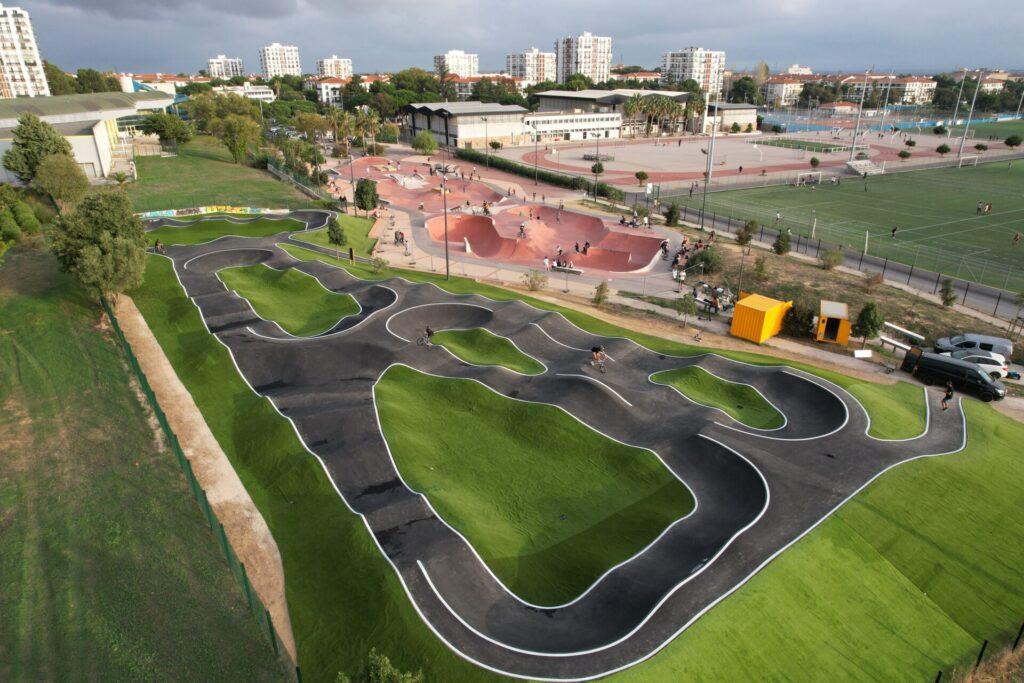
Viewing pumptracks and skateparks as competing facilities is often a mistake. They serve different purposes and can coexist perfectly within the same sports complex.
The Pumptrack as a Gateway to Action Sports
A pumptrack is often the first introduction to action sports.
Children progressively develop balance, line choice, coordination, confidence and overall mobility.
These fundamental skills can later facilitate progression in a skatepark environment.
The Skatepark for Freestyle Progression
A skatepark enables riders to take their skills further by developing tricks, jumps, creativity, technical lines and advanced freestyle riding.
A True Urban Sports Hub
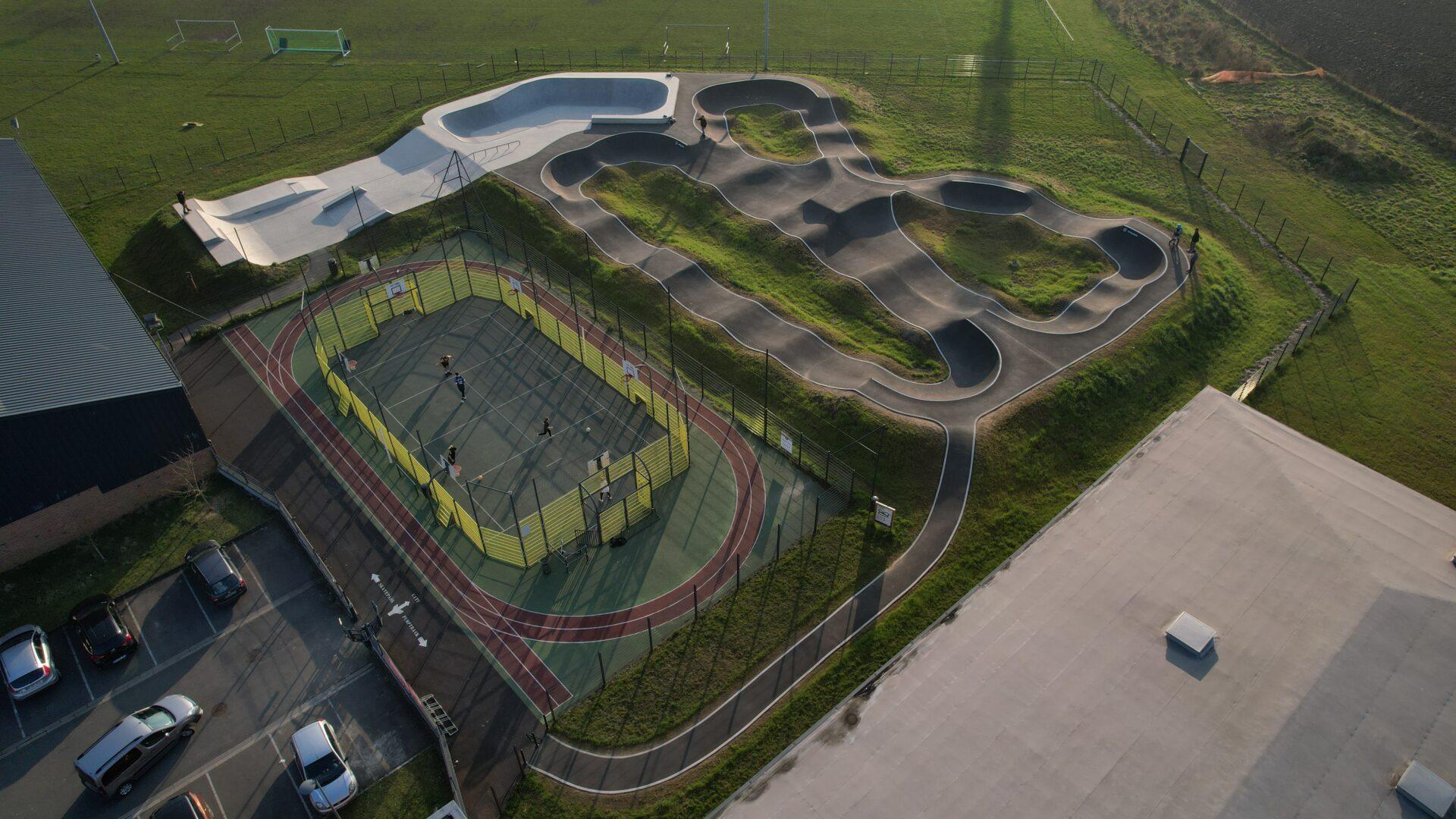
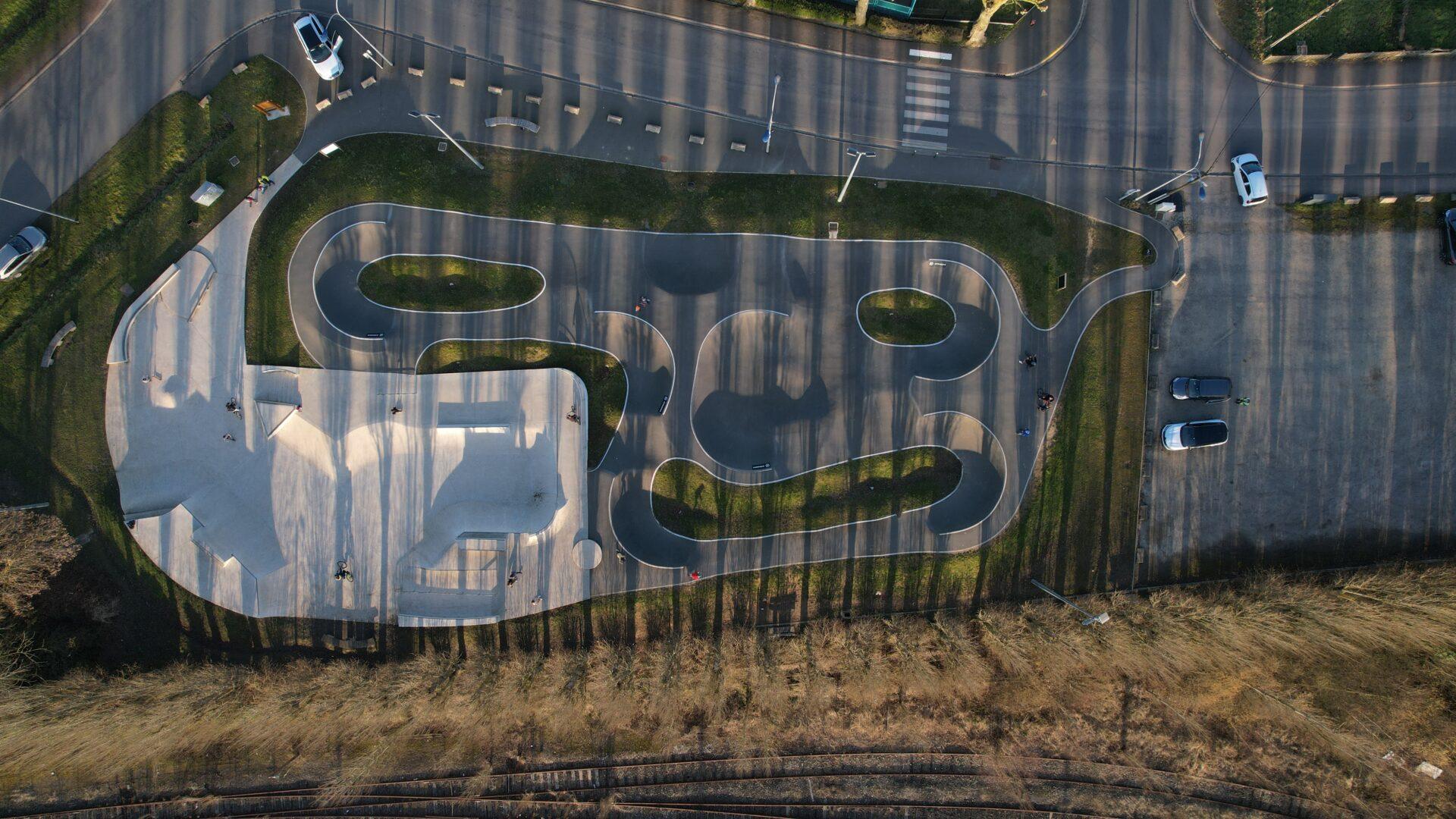
More and more municipalities are choosing to combine pumptracks and skateparks within the same location.
This approach offers numerous benefits, including shared infrastructure, increased attractiveness, greater diversity of users, higher attendance levels, stronger community engagement and complementary sporting activities.
As a result, these projects often become genuine outdoor sports destinations.
How to Choose Between a Pumptrack and a Skatepark?
The decision largely depends on the objectives of the project.
A pumptrack is particularly well suited for family-oriented use, young children, multi-sport activities, communities seeking an accessible facility, tourist destinations and intergenerational spaces.
A skatepark is especially relevant for advanced freestyle riding, skateboard and scooter communities, urban culture projects and experienced riders.
The Ideal Solution: Combining Both Facilities
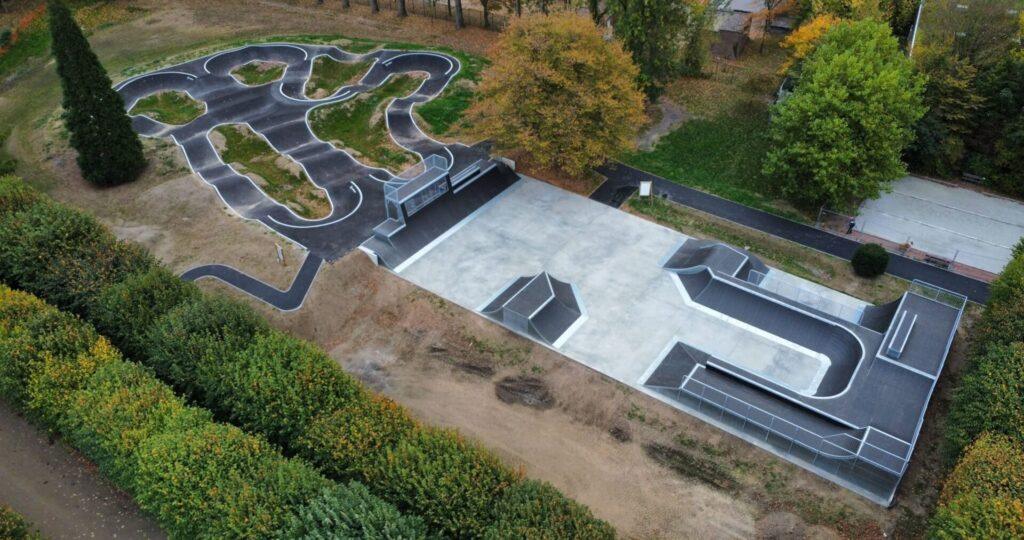
Today, the most successful projects frequently combine several complementary spaces.
A site featuring a pumptrack, a skatepark, relaxation areas, landscaped surroundings and urban furniture can create a vibrant community gathering place.
This approach perfectly aligns with modern expectations for sports and urban development.
Why Are Pumptracks Growing So Rapidly?
The growing popularity of pumptracks can be explained by several factors, including immediate accessibility, low maintenance costs, intergenerational appeal, high attendance rates, compatibility with multiple sports and effective landscape integration.
Pumptracks also align with public policies promoting active mobility and outdoor recreation.
Conclusion
Pumptracks and skateparks do not serve exactly the same purpose, but they are far from being competitors.
Pumptracks encourage a flowing, accessible and family-friendly riding experience, while skateparks focus on freestyle progression and technical skill development.
Together, they provide a comprehensive solution that meets the needs of riders, communities and local authorities alike.
For cities seeking to develop modern, sustainable and attractive sports facilities, combining a pumptrack and a skatepark has become one of the most relevant and effective solutions available today.