
Pump Tracks: The New Multi-Sport Court for Cities?
Pump tracks vs. multi-sport courts: a shift in public spaces?
In the early 2000s, multi-sport courts (often used for soccer or basketball) became a standard facility for many cities. Compact, versatile and accessible, they responded to a simple need: offering a free space where people could play without club membership or formal organization.
Twenty years later, usage patterns have evolved.
Urban sports have diversified: BMX, scooters, skateboarding, roller sports and mountain biking. Younger generations are often less interested in structured team games and more drawn to movement, flow and personal experience.
In that context, comparing pump tracks with traditional multi-sport courts becomes relevant. When the terms “pump track” and “multi-sport court” are mentioned together, it is not about a hybrid facility, but rather about two generations of public space design.
An evolution in youth sports participation
According to the Sports & Fitness Industry Association (SFIA), younger generations are increasingly drawn to informal, self-organized sports practiced outside traditional club structures (SFIA Participation Report).
Multi-sport courts reflect a structured model of play:
two teams, one field, defined rules.
Pump tracks operate differently:
a circuit, a rhythm, a trajectory.
No match to win.
No exclusion based on skill level.
No reservations required.
This absence of visible hierarchy changes how the space is used.
An intergenerational facility
be dominated by a specific group, frequently teenage boys. Studies on the gendered use of public space have highlighted how certain sports facilities can unintentionally discourage broader participation.
Because of its circular layout and individual riding style within a shared space, a pump track naturally reduces this type of exclusive occupation.
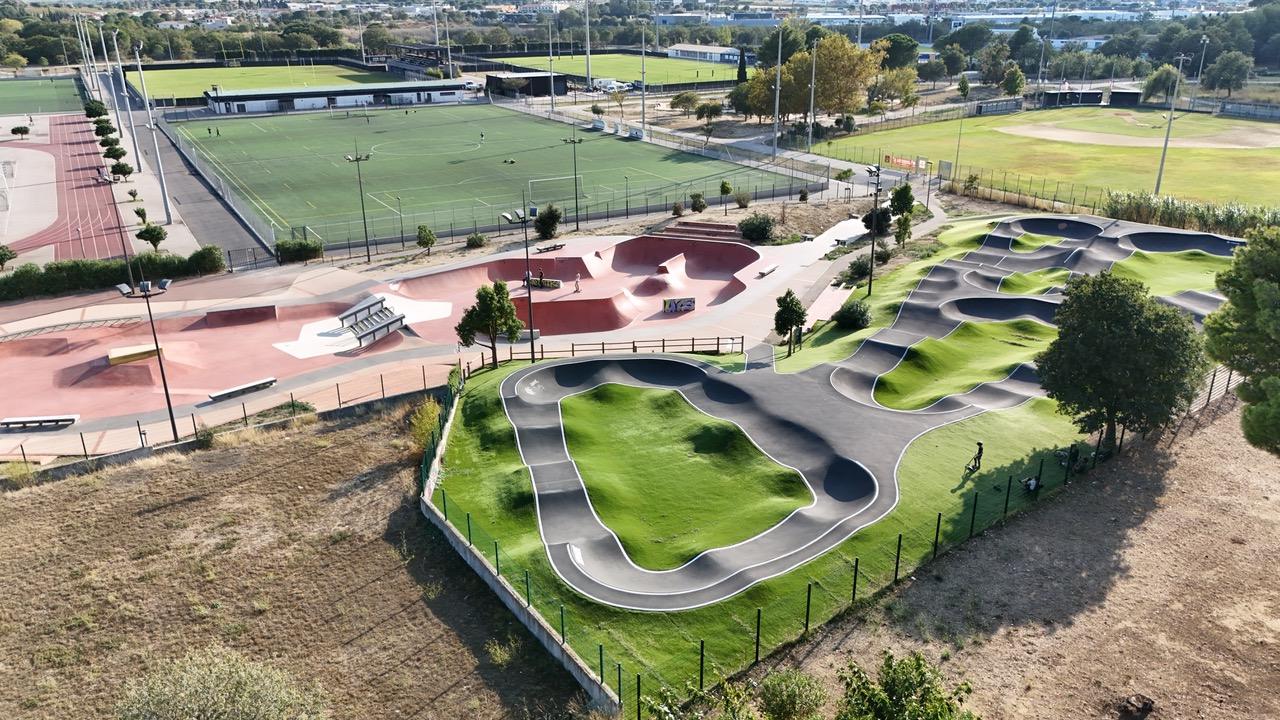
On the same track, it is common to see a child on a balance bike, a middle-school student on a scooter, a parent on a mountain bike or an experienced BMX rider.
The space becomes a place of circulation and interaction rather than a territory to defend.
Surface, maintenance and cost: two different approaches
From a technical perspective, comparing pump tracks and multi-sport courts highlights their different approaches.
A multi-sport court is typically a standardized metal structure.
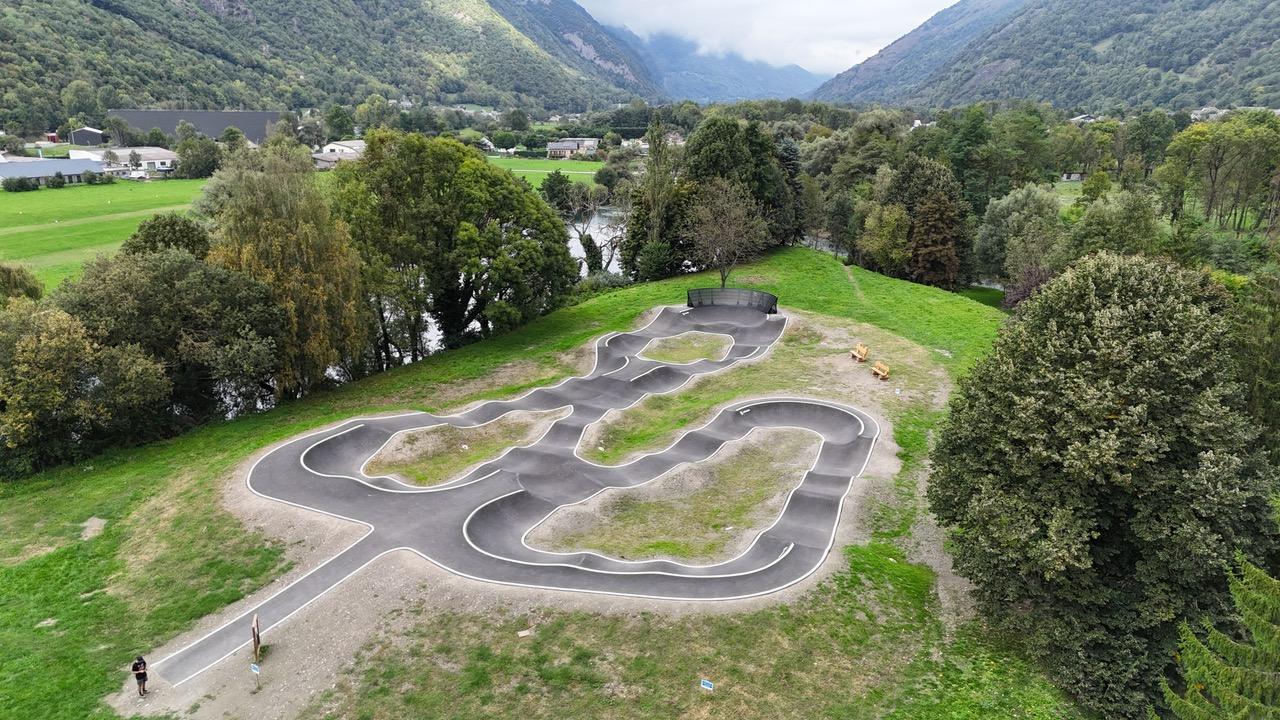
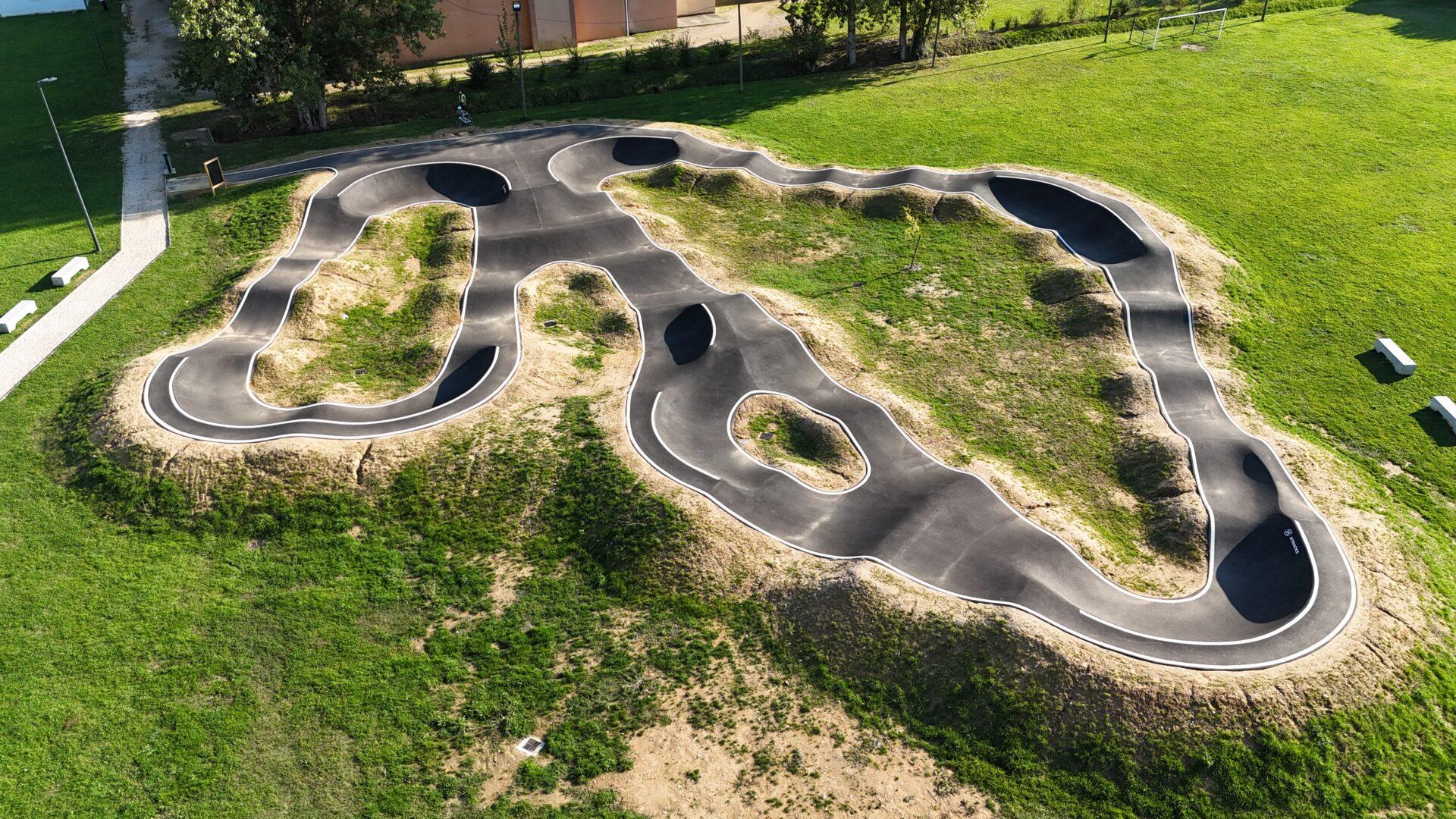
A pump track is a designed landscape, shaped and integrated into its environment.
Built in asphalt or stabilized materials, pump tracks offer:
- high durability
- minimal maintenance
- the ability to adapt to the natural terrain
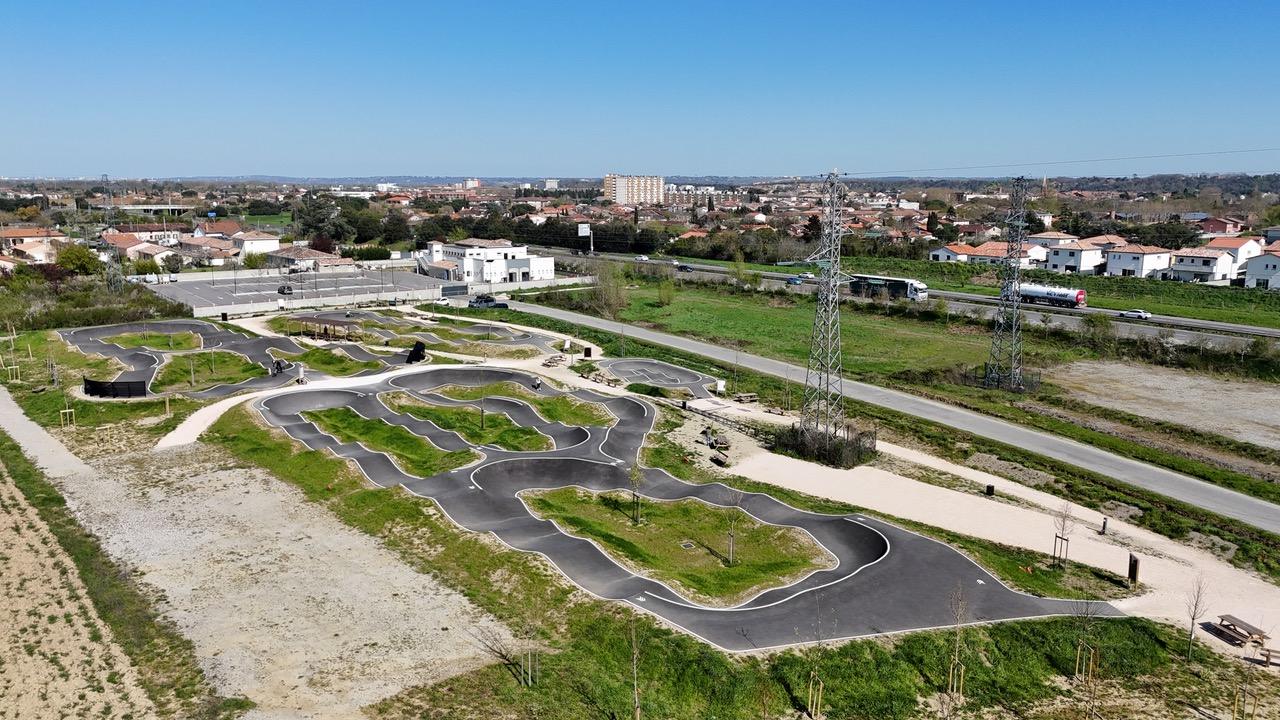
They can also transform underused areas such as vacant lots, park edges or sloped land.
A multi-sport court occupies a rectangle.
A pump track shapes the landscape.
A response to contemporary expectations
Today, cities are looking for facilities that are inclusive, intergenerational, visible and compatible with active mobility policies.
In this context, the comparison between pump tracks and multi-sport courts illustrates a broader shift in public space design.
Urban action sports have gained visibility with the inclusion of BMX freestyle and skateboarding in the Olympic Games, and the way people practice sports has become more fluid and less segmented.
A pump track does not necessarily replace a multi-sport court.
It complements existing sports facilities to better reflect contemporary uses.
Designing spaces that evolve with their time
Specializing in pump tracks and BMX tracks, HTracks develops projects with a modern vision of urban riding. From the first sketch to the ribbon cutting, each project is designed as a durable space for everyday use.
Comparing pump tracks and multi-sport courts is not about opposing two types of facilities.
It is about observing how recreational practices evolve.
The space remains.
The way people use it changes.