What Can You Ride on a Pump Track? Bikes, Skateboards, Scooters and More
A pump track is not just for BMX riders.
That is one of the most persistent misconceptions.
In reality, pump tracks are designed to accommodate a wide range of riding disciplines. The very structure of the track, a sequence of rollers, berms and a continuous loop, allows different types of wheeled sports to use the same space, provided the design is well executed.
A well-designed pump track becomes shared ground, where multiple disciplines coexist rather than compete.
Bikes and BMX: the original discipline
Pump tracks originated from BMX culture. The concept of “pumping”, generating speed without pedaling by using body movement, is what shapes the track design.
Whether on a BMX or a mountain bike, riders rely on:
- core strength
- upper and lower body coordination
- the ability to read lines and trajectories
Pump tracks have also become a recognized training tool within cycling disciplines, particularly for developing balance, rhythm and bike control.
Scooters: a rapidly growing practice
Over the past decade, freestyle scooters have become a major presence in public spaces. Urban sports infrastructure must now take this evolution into account.
On an asphalt pump track, scooters perform particularly well. The smooth surface, flowing curves and absence of abrupt transitions make the track both accessible and enjoyable.
Their lightweight design allows younger riders to get comfortable quickly. For local governments, this compatibility is significant: a single facility can serve multiple user groups.
Skateboarding and roller sports: a different reading of the track
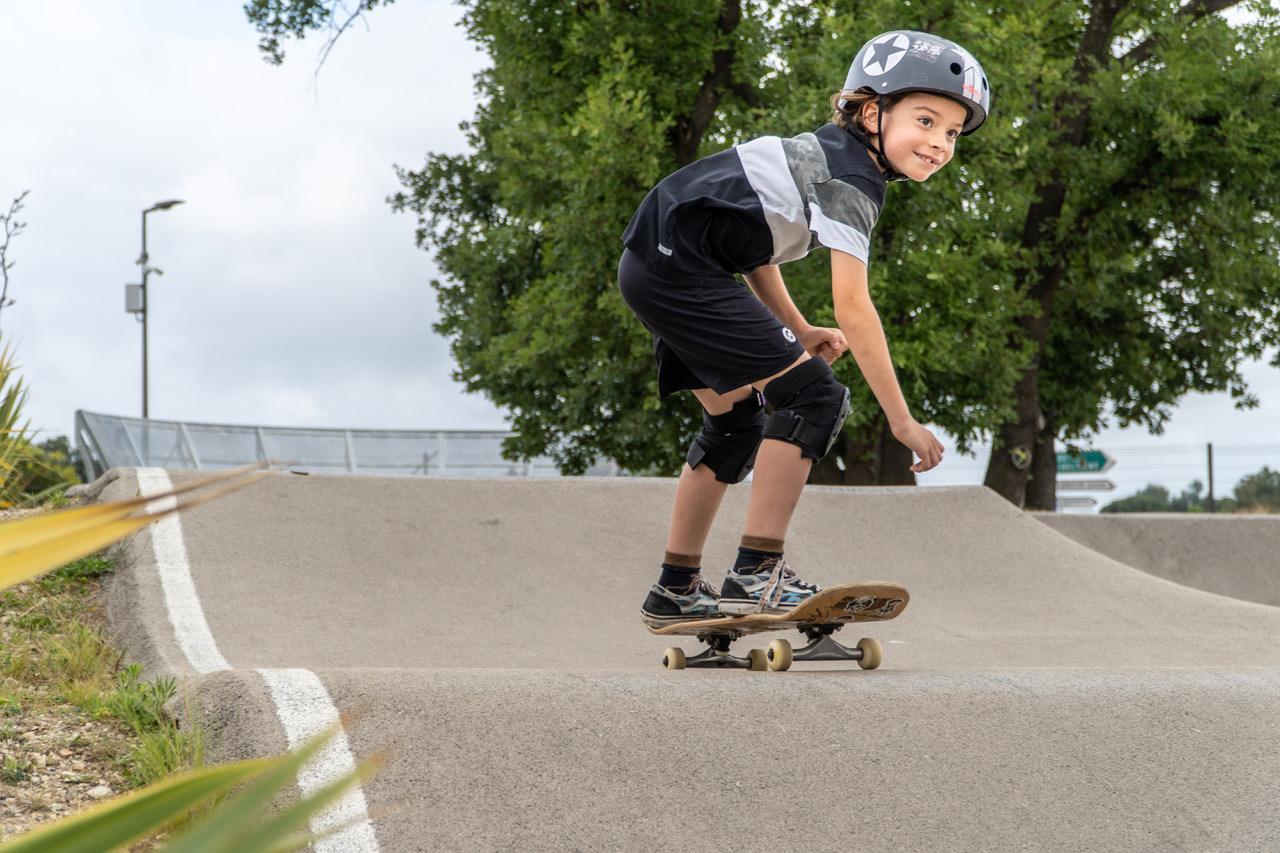
Skateboarders and roller riders approach the track differently. Their riding style tends to be more lateral, focusing on edge control and weight transfer through the berms.
A well-designed pump track allows for this variety of interpretation. Berms provide continuous support, while rollers become dynamic transition points.
Here, the versatility of the track depends on the precision of its design.
A layout that is too abrupt excludes certain users.
A progressive layout invites participation.
Managing multiple uses
The key question is not only “what can you ride on a pump track?”
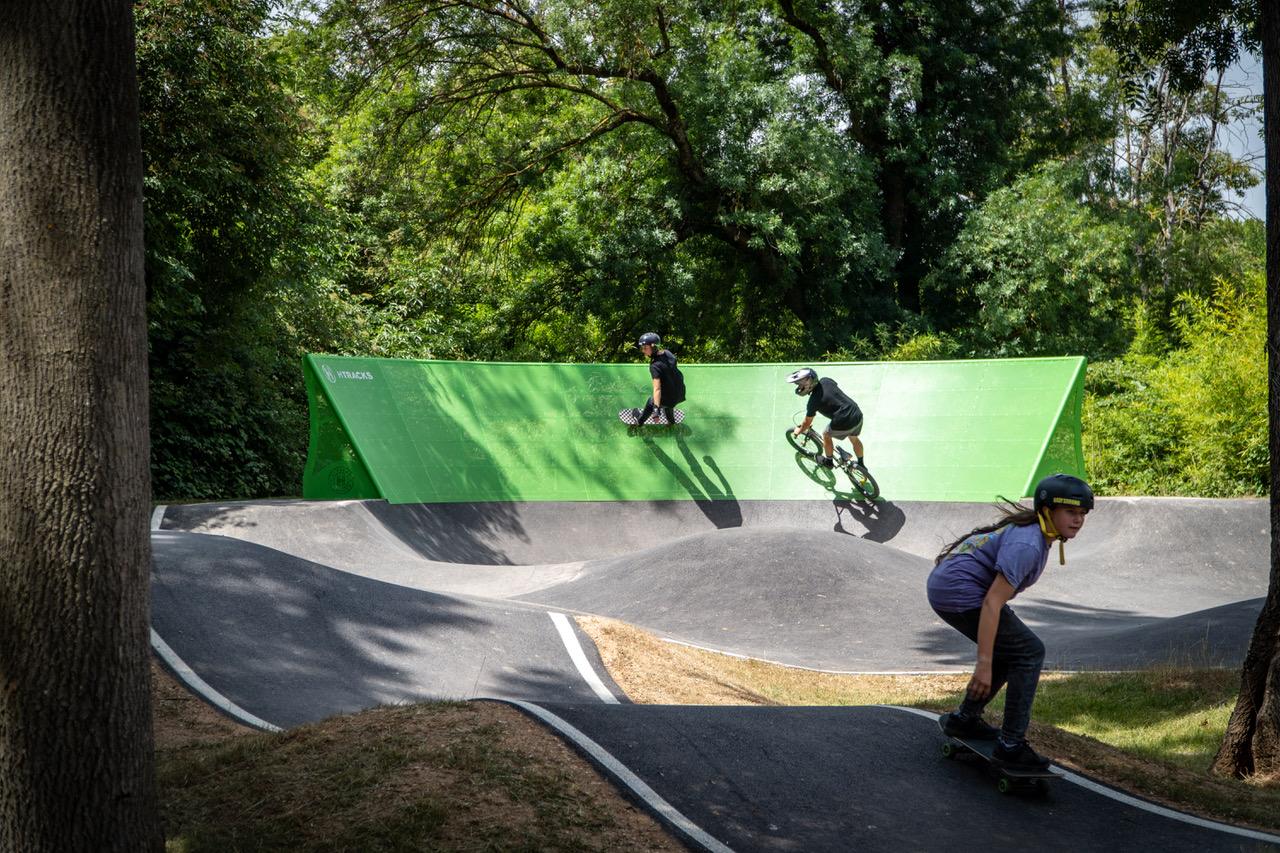
It is also: how can different users share the space safely?
Several design elements are essential:
- sufficient width in key sections
- full visibility throughout the track
- clear signage when necessary
Pump track design must anticipate these mixed uses to prevent conflicts and maintain smooth circulation.
A reassuring investment for cities
For local governments, versatility is a strategic advantage. Investing in a single-purpose facility limits its long-term social impact.
A pump track, by contrast, naturally attracts a diverse audience:
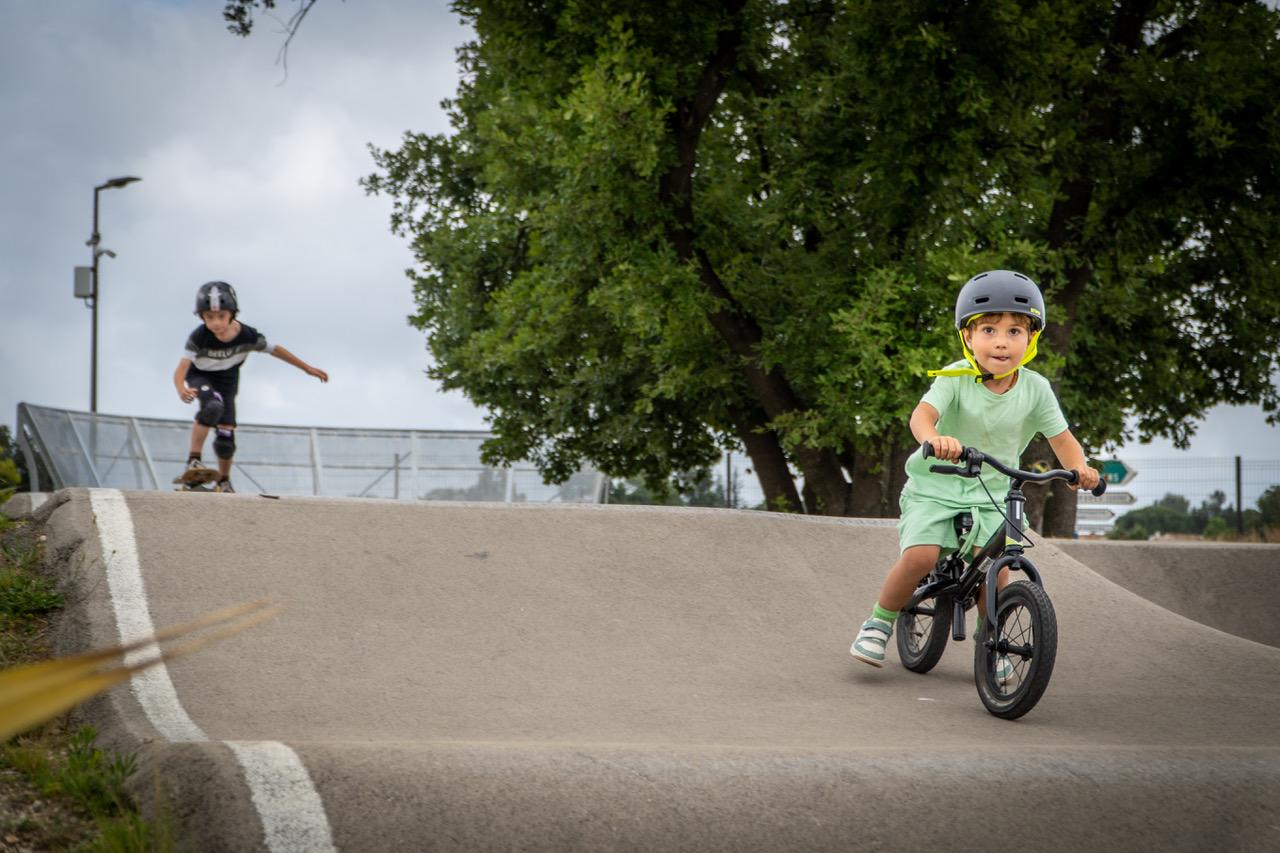
- children on balance bikes
- teenagers on scooters
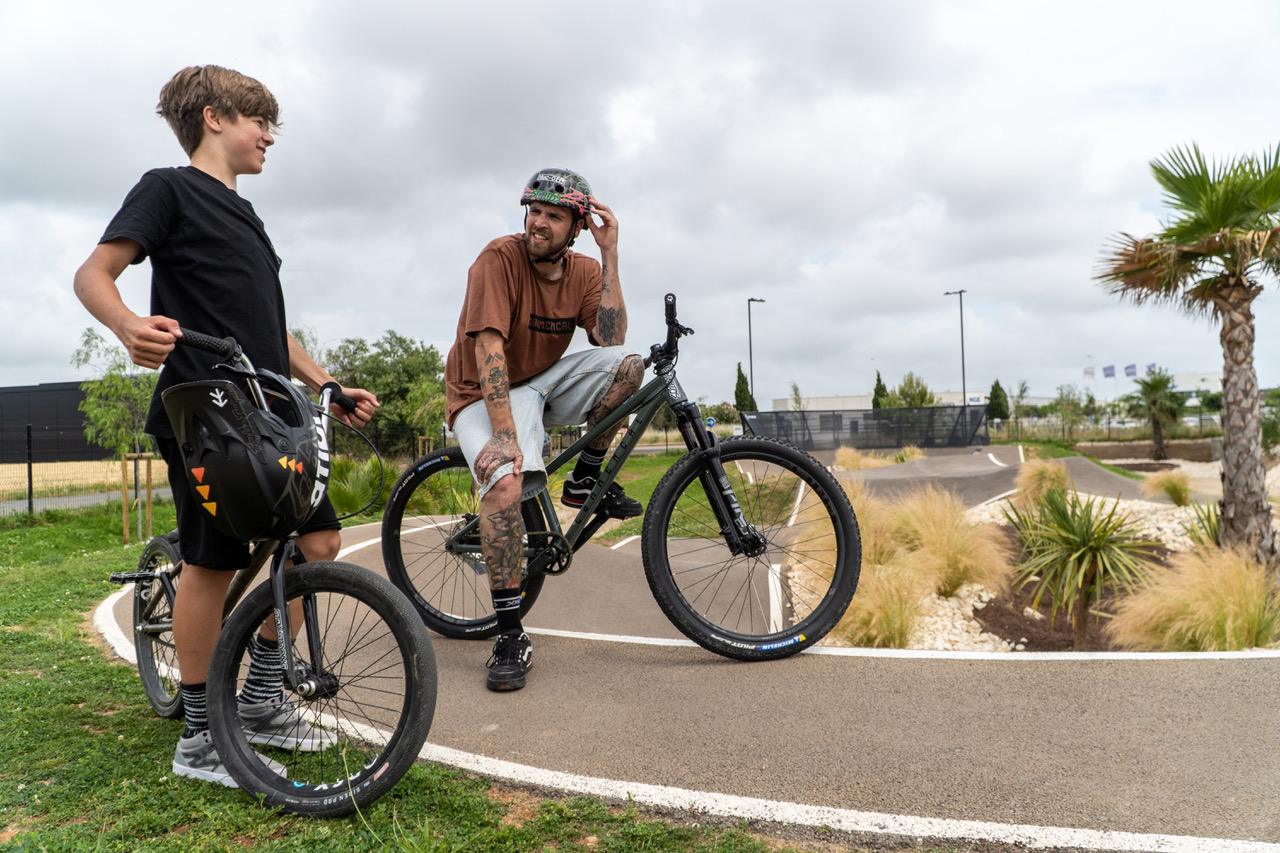
- BMX riders
- adults on mountain bikes
This diversity increases usage and strengthens the justification for public investment.
According to the National Barometer of Sports Participation (INJEP, 2022), informal and urban sports are rapidly growing, particularly among younger generations. Facilities that accommodate multiple disciplines respond directly to this shift.
A shared space for expression
Specializing in pump tracks and BMX tracks, HTracks designs layouts that embrace this diversity of uses.
Versatility is not added later.
It is built into the design from the very first line.
A successful pump track does not belong to one discipline.
It becomes a shared space where each rider finds their own line.