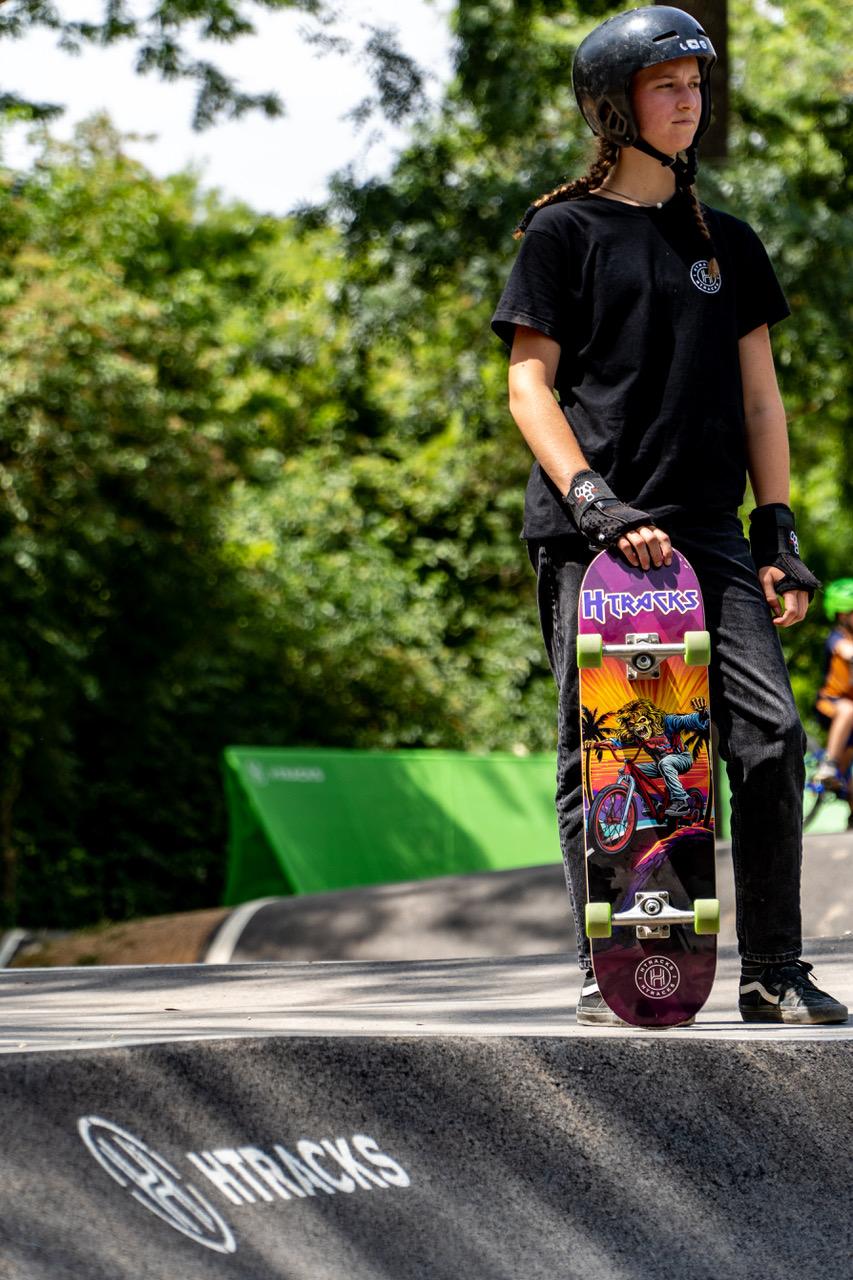
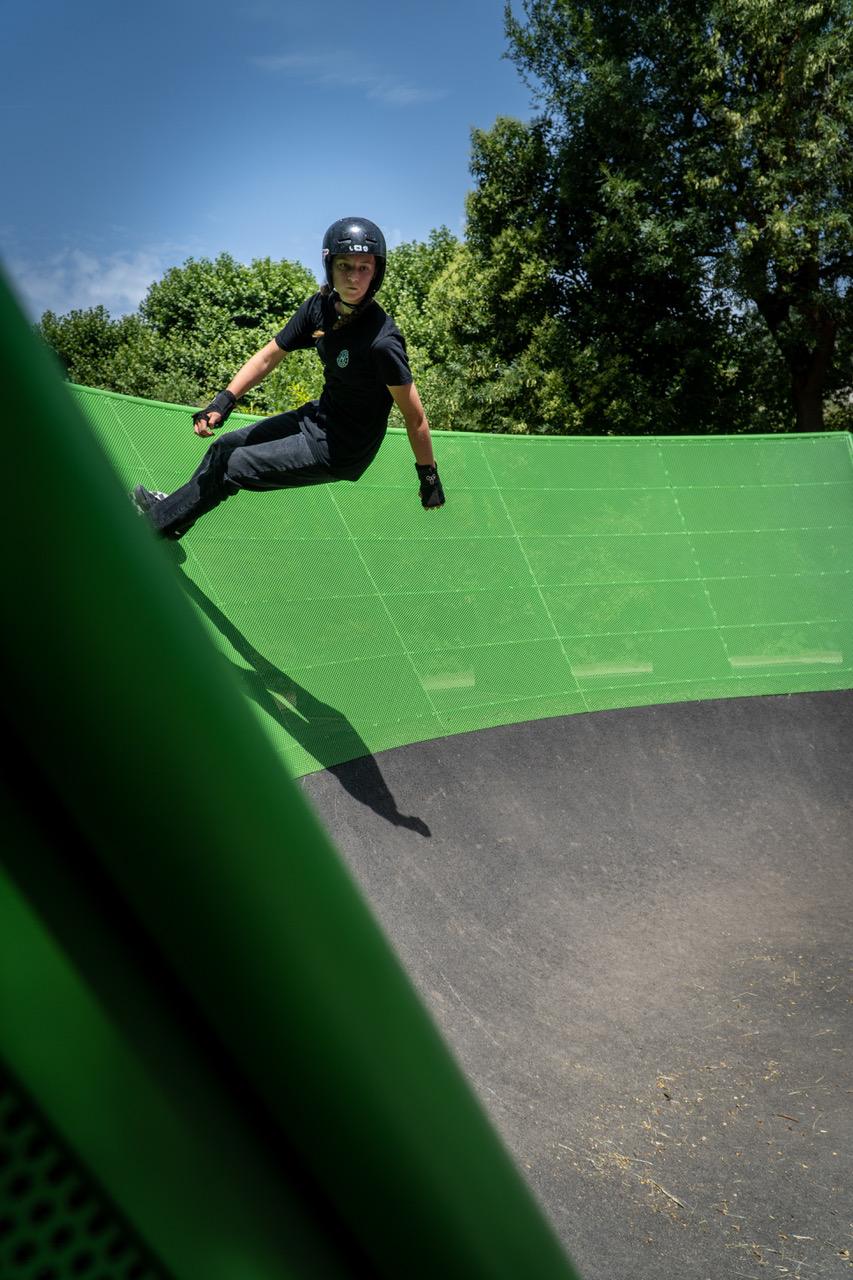
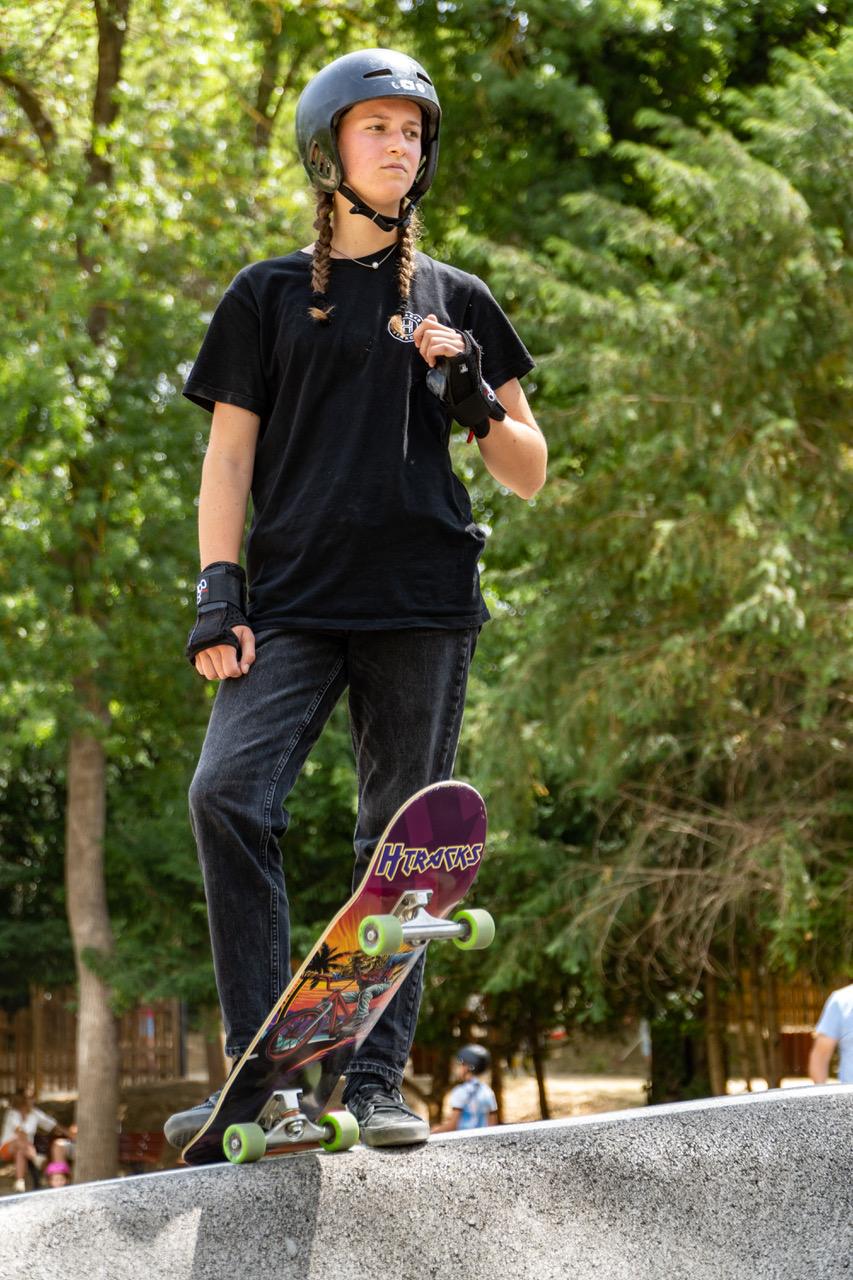
Pump Tracks and Women’s Participation: A Sport Open to Everyone?
The question of gender balance in urban sports is no longer just a symbolic debate. Today it is measured, documented and widely discussed.
In France, women represent roughly 38% of licensed cyclists, yet their presence drops significantly in so-called “gravity” or freestyle disciplines. The same pattern can be observed across many action sports worldwide. For years, BMX freestyle was largely perceived as a male-dominated discipline.
However, things are changing. The introduction of women’s BMX freestyle at the Tokyo Olympic Gamessignificantly increased the visibility of female riders and helped accelerate participation.
Why pump tracks encourage women’s participation
Unlike BMX race tracks or some skateparks that are often segmented by skill level, a pump track follows a simple concept: a continuous loop that is readable, progressive and open to different riding styles.
This structure helps reduce several barriers commonly identified in research on women’s participation in sports:
- fear of social judgment
- feeling of not belonging in public sporting spaces
- lack of visible role models
Studies on youth sports participation show that young women are often more sensitive to perceived competence and to the gaze of others when practicing sports in public environments. On a pump track, however, everyone rides at their own pace.
There is no race to win, no hierarchy of spaces dominated by the most experienced riders. Progress comes through repetition, rhythm and reading the terrain. That dynamic changes the experience entirely.
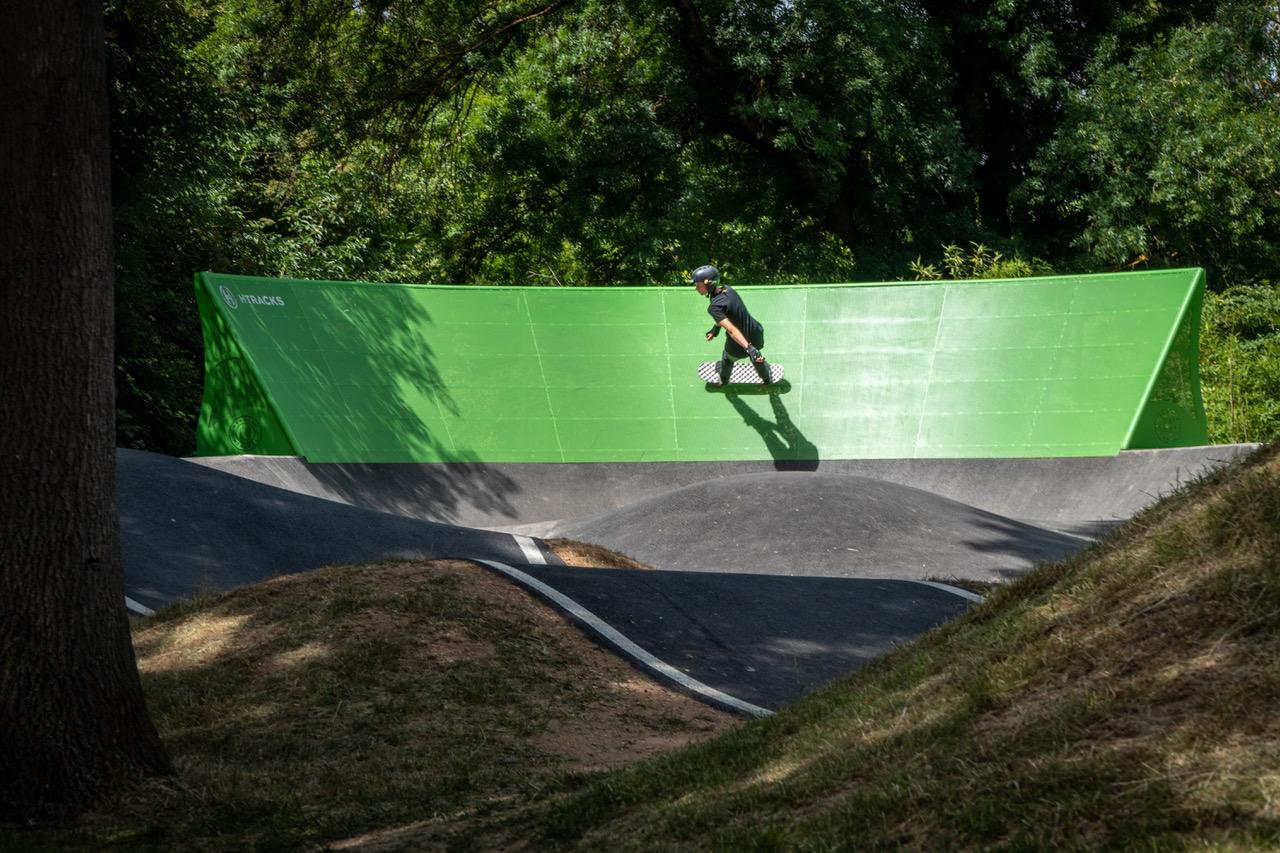
An infrastructure aligned with public policy goals
Today, the question is not only about sport. It is also political.
Local governments increasingly evaluate public facilities based on equal access and inclusive use of public space. Many reports highlight that outdoor sports facilities are still largely dominated by male users.
A well-integrated pump track can help address this issue by offering:
- intergenerational use
- free and open access
- constant visibility within public space
In this sense, encouraging women’s participation does not require creating separate spaces. It starts with designing inclusive facilities from the very beginning of the project.
The role of design in inclusion
Accessibility is not just a matter of communication. It is largely determined by design.
A well-shaped pump track offers multiple levels of interpretation:
a smooth line for beginners, more technical sequences for experienced riders.
This is where the precision of the layout becomes crucial.
A track that is too technical can exclude beginners.
A progressive layout invites participation.
From the first sketch to the ribbon cutting, designing a pump track means creating a space where everyone can find their place.
A new generation of riders
Female riding communities are growing. Mixed events are becoming more common. Local collectives are emerging.
The movement is real.
Pump tracks support this evolution because they combine simplicity of access with technical depth. They do not categorize riders. They welcome them.
Opening the door to action sports for a new generation of riders is not just a slogan.
It is a design philosophy.