
Designing and Building a Pump Track: The Key Steps Behind a Successful Project
A pump track does not begin with an excavator.
It begins with a careful reading of the site.
Designing a pump track requires a comprehensive approach: expected uses, technical constraints, landscape integration and long-term durability. A successful project relies on a sequence of coherent steps, each shaping the next.
Before a single line is drawn, the site itself must be understood. Topography, soil conditions, stormwater management and the surrounding environment all directly influence the quality of the final riding experience. A natural slope can become an advantage. An underused plot of land can turn into a new focal point for the community.
The design phase: shaping the riding experience
At the core of every project lies the track layout.
Designing a pump track is about finding the right balance between accessibility and challenge. The circuit must allow beginners to quickly find their rhythm while still offering more experienced riders technical sequences and opportunities for progression.
A strong design relies on three essential principles:
- continuous flow, without abrupt breaks
- progressive levels of difficulty
- an immediately readable layout
The “shape” of a pump track is not simply aesthetic. It defines the riding experience. A well-designed line creates flow. An approximate line quickly leads to fatigue and frustration.
Earthworks: bringing the design to life
Once the design is finalized, the construction phase begins.
The terrain is shaped, calibrated and compacted. Rollers and berms are carved directly into the ground, with slopes carefully adjusted to maintain the intended riding dynamics. At this stage, even small inaccuracies can alter the overall feel of the track. Experienced users, skateboarders in particular, will notice the difference from the very first laps.
The surface: ensuring long-term durability
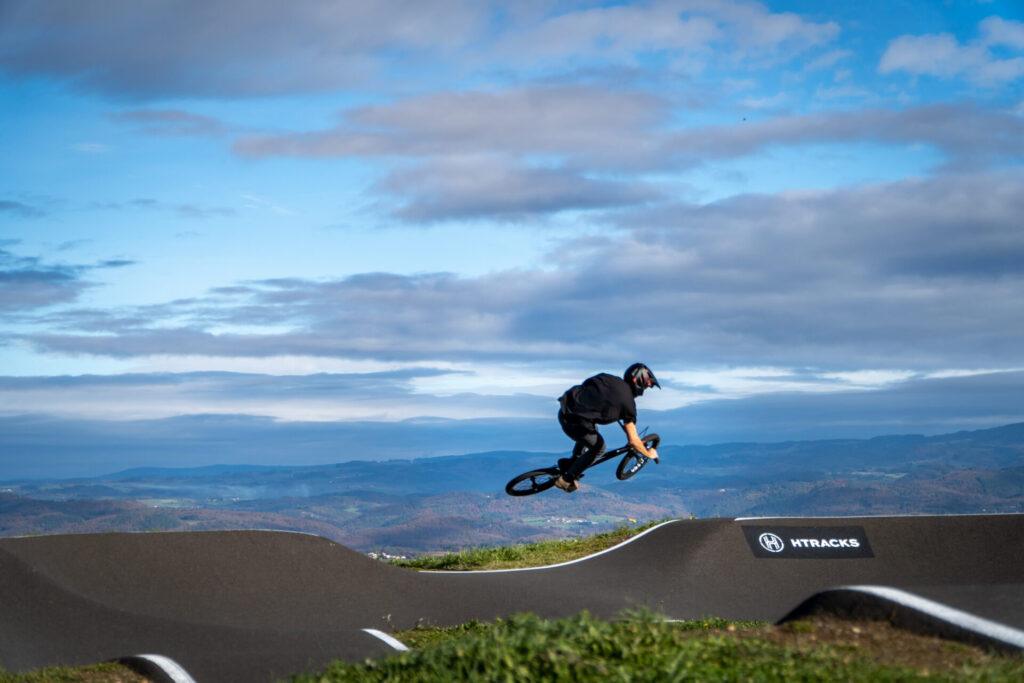
The choice of surface plays a crucial role in the lifespan of the project. Asphalt has become the reference material for pump tracks thanks to its durability and riding quality.
When properly installed, it provides:
- a smooth and stable surface
- minimal maintenance requirements
- year-round usability in most climates
Execution is just as important as the material itself. Temperature, layer thickness and finishing all influence the final performance of the track.
Opening the track: when the community takes over
The end of construction marks the beginning of another phase: community use.
A well-designed pump track naturally attracts a wide range of users. Children start experimenting, teenagers push their limits, and parents often begin by watching before joining in themselves. When the layout is intuitive and welcoming, this dynamic emerges naturally.
From the first sketch to the ribbon cutting, mastering every step of the process ensures a smooth transition from project to public space.
A technical project with lasting impact
For local governments, investing in a pump track means shaping a public space designed to last for years.
Pump track design is not simply about building a sports facility. It creates a place for movement, progression and social interaction.
A successful track is not only something you see.
It is something you feel, lap after lap.