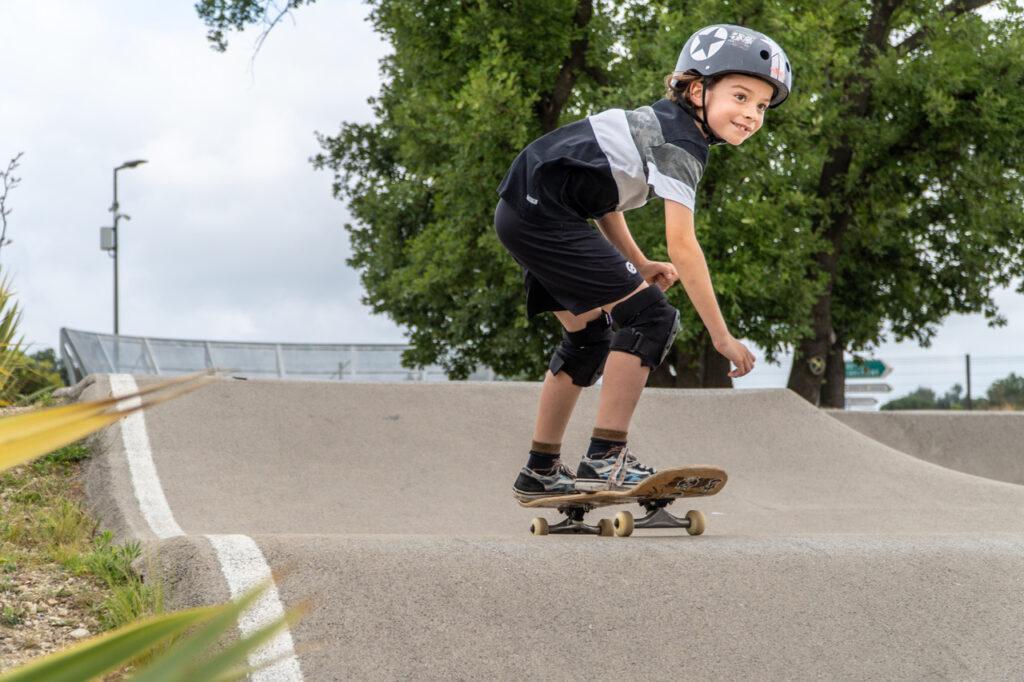
Pump Tracks for Kids: What Age Can Children Start Riding? Balance Bikes and Kids Circuits
Parents and educators often ask the same question:
At what age can a child start riding on a pump track?
Contrary to common assumptions, riding on a pump track does not begin with BMX bikes. It begins with balance.
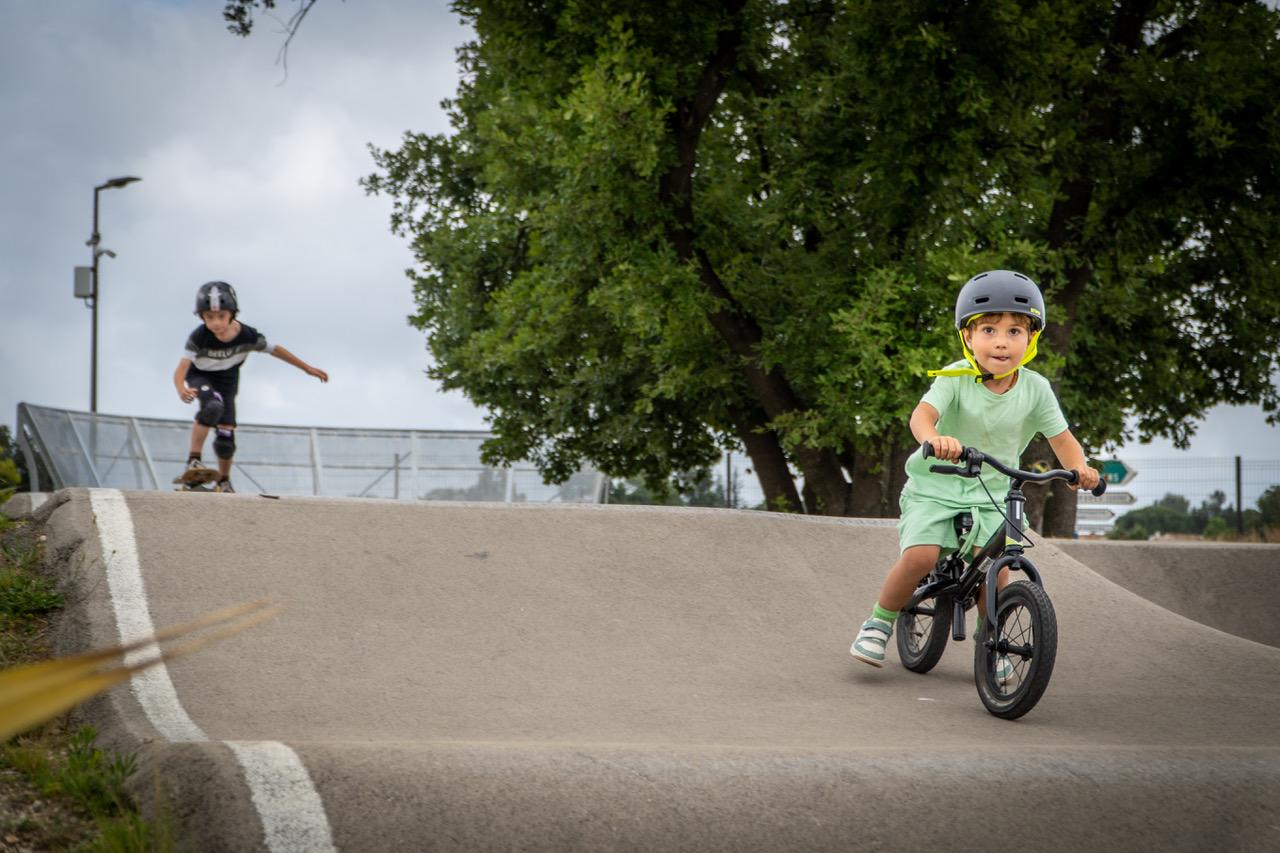
As early as 2 to 3 years old, children can ride on an adapted pump track using a balance bike. The structure of a pump track, gentle rollers, continuous turns and a closed circuit with no motorized traffic, makes it a particularly valuable environment for developing motor skills.
The key concept is simple: progression.
Balance bikes and coordination: what motor development research shows
Between the ages of 2 and 6, children rapidly develop several fundamental abilities:
- dynamic balance
- arm and leg coordination
- spatial awareness
- risk management
Research in motor development shows that learning balance on a pedal-less bike (balance bike) helps children transition more easily to riding a traditional bicycle without training wheels. A study conducted by researchers at the University of Copenhagen (2018) highlighted the effectiveness of balance bikes in accelerating the learning process.
On a pump track designed for young riders, the gentle rollers require children to constantly adjust their center of gravity. They naturally learn to absorb the terrain with their legs. Rather than simply riding over the surface, they begin interacting with it.
It becomes learning through movement.
At what age can children ride a pump track?
There is no universal age, but several stages can generally be identified:
Ages 2–4
Balance bikes on a very gentle layout, usually accompanied by an adult.
Ages 5–7
Light bicycles or small BMX bikes (16–20 inches), discovering the first rhythm of the rollers.
Ages 8 and up
More technical reading of the track, learning rhythm and the pumping motion.
The key is not the exact age.
It is how the track is designed.
A well-designed kids circuit typically includes:
- low rollers
- wide turns
- full visibility across the track
- the possibility of separating different riding flows
A learning tool for schools
Within school programs, cycling activities are increasingly integrated into physical education and broader mobility education initiatives.
In the United States, programs such as Safe Routes to School, supported by the U.S. Department of Transportation, aim to help children develop safe cycling and mobility skills from an early age. These initiatives encourage young riders to gain confidence and independence on bicycles before reaching adolescence.
In this context, pump tracks offer an excellent training environment:
- a controlled and safe setting
- opportunities to develop bike handling skills
- trajectory management
- repeated practice without traffic
For schools, a pump track is not simply recreational equipment.
It can also serve as a practical educational tool.
Safety and design: the role of layout
A pump track for children should not simply be a smaller version of an adult track.
It requires a different design approach.
The precision of the shaping is essential: clear curves, progressive difficulty and no blind spots.
Specializing in pump tracks and BMX tracks, HTracks designs spaces capable of welcoming both young beginners and experienced riders without excluding either group.
A well-designed pump track allows a child to ride their first laps in the morning — and still offer rhythm and challenge for experienced riders later in the day.
A place to learn and to build confidence
Beyond technical skills, pump tracks help children develop something more subtle: confidence.
Learning how to manage speed.
Feeling improvement over time.
Coming back to try again and complete the “perfect lap.”
At a time when sedentary lifestyles are increasing among young people, according to the Centers for Disease Control and Prevention (CDC), only about 24% of children aged 6–17 in the United States meet the recommended daily level of physical activity, creating attractive and accessible spaces for movement has become a major challenge.
A pump track does not force movement.
It simply makes movement appealing.